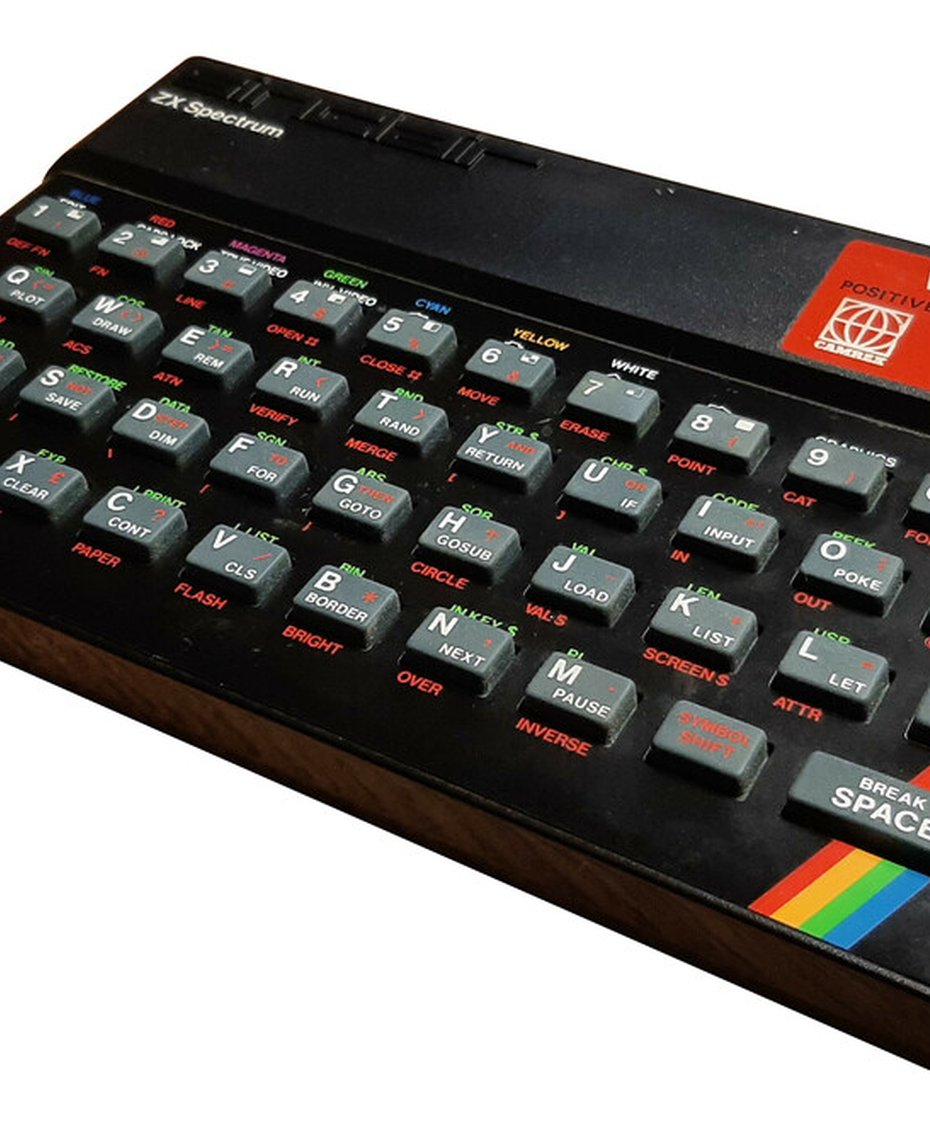
ZX Spectrum, 1982
Released in 1982, the ZX Spectrum built on the success of the predecessor ZX81 machine, launching in April 1982, and within a year, it had sold close to a million units, despite early production problems and lengthy waiting lists.
The machine was soon to be one of the UK’s leading games machines. Every major and minor games company produced software for it. It became the home of many classic games of the era, and making household names of companies such as Ultimate Play the Game, Ocean, Hewson and Durell to name but a few.
The ZX Spectrum is remembered for its rubber keyboard, small compact size and distinctive rainbow motif. Its popularity was based on its relative affordability. It was £125 for 16 KB of RAM or £175 with 48KB; these prices were later reduced to £99 and £129 respectively. Owners of the 16 KB model could purchase an internal 32 KB RAM upgrade. Users were able mail their 16K Spectrums to Sinclair to be upgraded to 48 KB versions.
In 1984, Sinclair updated the machine in the form of the Spectrum+, which had a new, sturdier case, and more solid keys. The company’s innovation was evident in that customers could buy a new machine, or send their old machine back to Sinclair who would fit the new keyboard for them. There were several other new features, the best of which was the new AY chip, in addition the internal speaker was replaced by the sound coming from the TV.
By 1986 Sinclair were in considerable money trouble, and Sinclair was to sell the computer brand (but not the company) to Amstrad, under the new manufacturer the machine gained an army of new fans, and gained a second wind, Alan Sugar's company would go on to produce Spectrum models up until 1992.
The computer in it's various forms would sell between five and six million units.
By clicking “Accept All Cookies”, you agree to the storing of cookies on your device to enhance site navigation, analyze site usage, and personalize content.